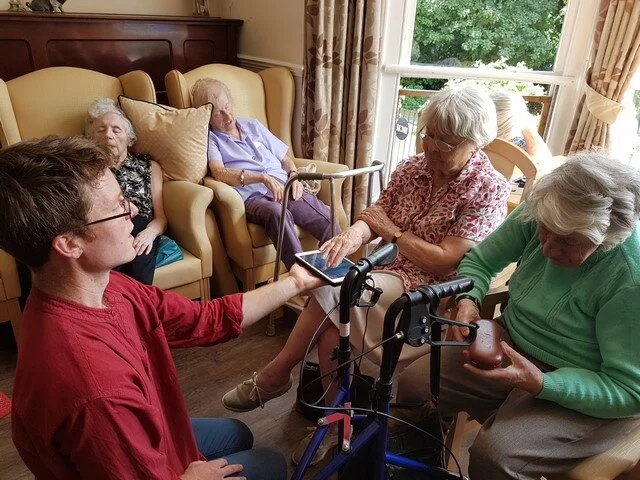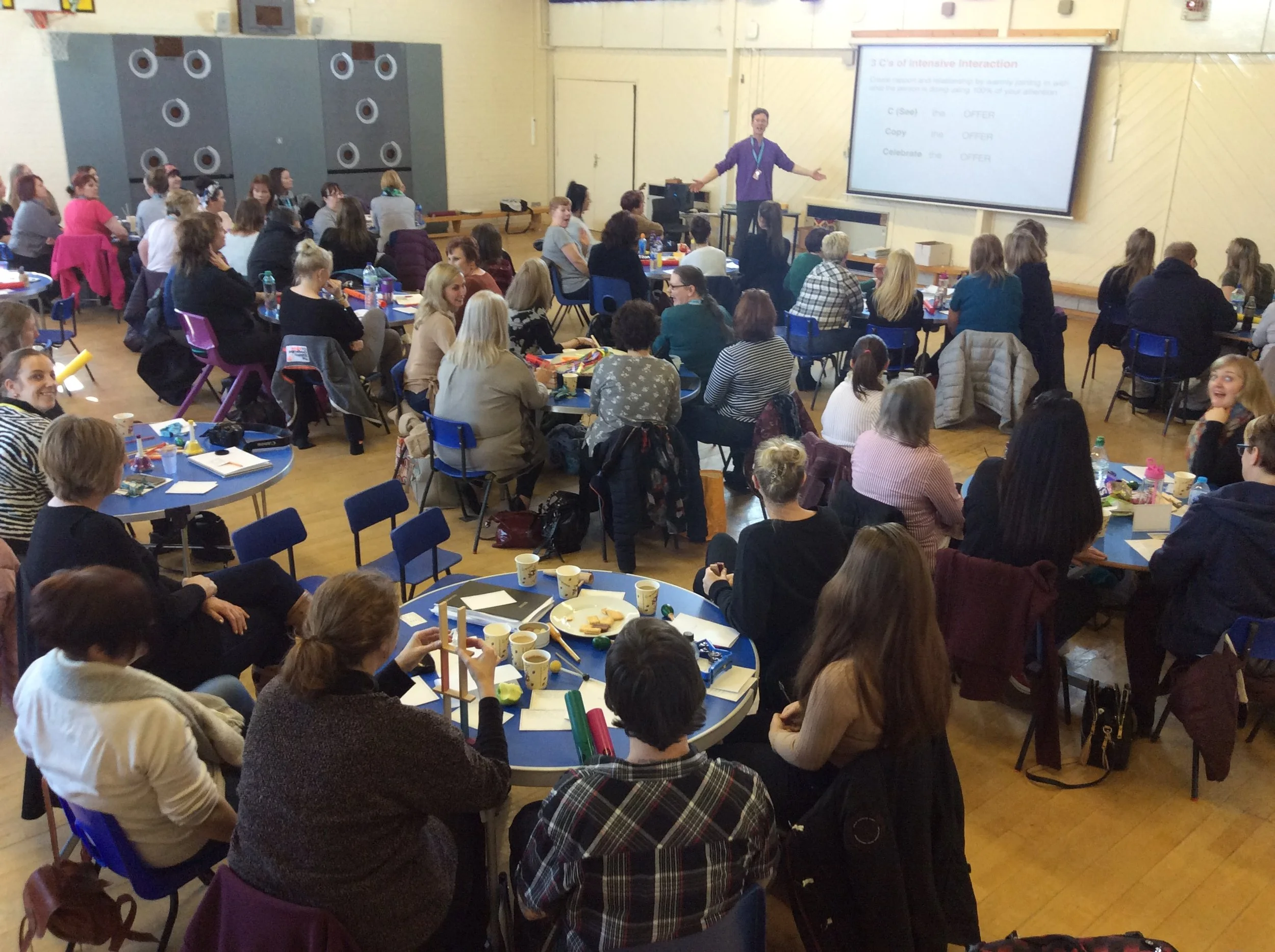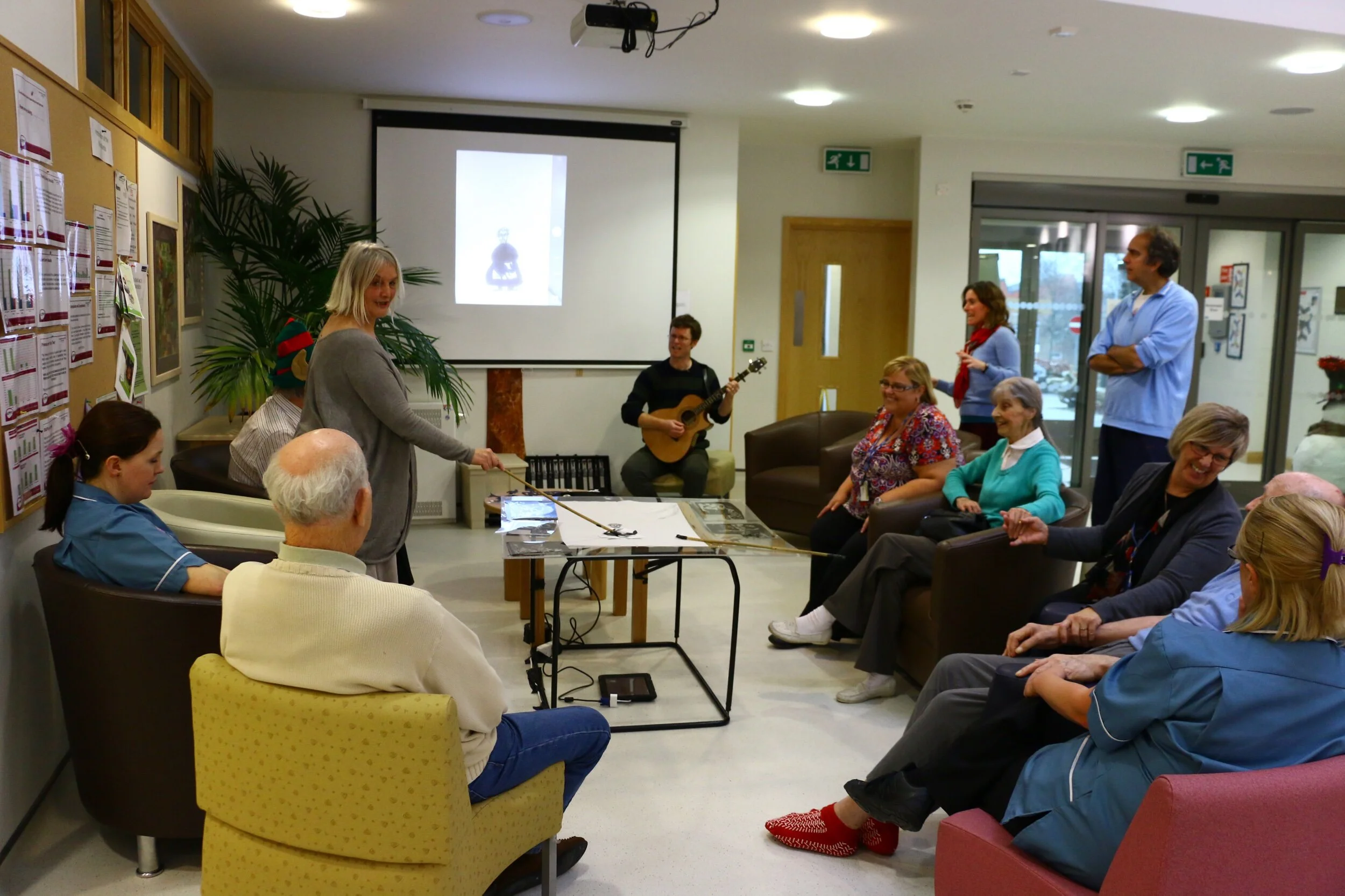
The third and final principle of rapport based musical communication is to be inclusive. This means that the practitioner should consider each participant’s level of ability and capacity so that participants find the activities both inviting and satisfying to engage in. We know if we are being inclusive when we see participants responding to our offers naturally, of their own volition and the signs of rapport are present - social attention, synchrony and positivity. If the practitioner is not considering the identity of the participants in this way then the practitioner is not doing this practice.
Be Socially Engaged: Principles of Rapport-Based Music
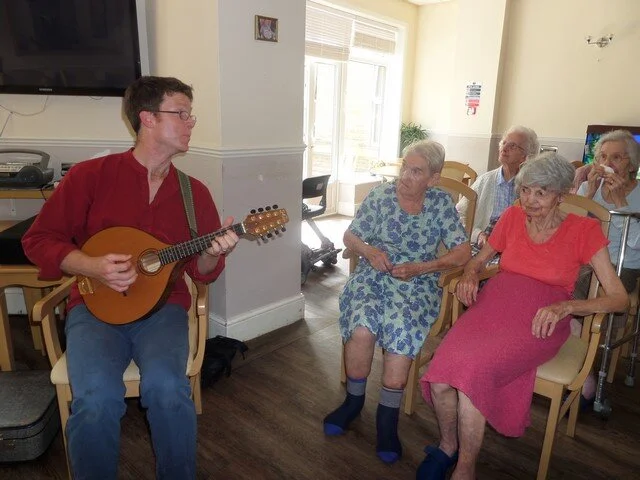
What does it mean to be socially engaged and how does this differ from the first principle of being responsive? To be socially engaged means to try to establish dialogue with the participants, whether musical, verbal or non-verbal. To be socially engaged requires that we develop skill in all areas of communication so that we can engage people in the way that is most appropriate for them.
Be Responsive: Principles of Rapport Based Music
Rapport-based Communication – Defining rapport
3C's of Rapport-based Communication
The purpose of the 3C’s is to provide practitioners with a clear practice for creating rapport that is based on Rosenthal’s three ingredients. By knowing the three ingredients and the 3C’s we can intentionally work for better rapport and offer more experiences of connection, communication and empathy to people who are at risk of social isolation.
What is social learning?
In social learning theory, learning is understood to be a chain of events involving people engaging with each other which leads to a change in something they care about. The most well known model of social learning is that of a ‘community of practice’, a term coined by Etienne Wenger and Jean Lave in the 1980’s in their research observing how traditional skills are taught and passed on in traditional West African societies.